
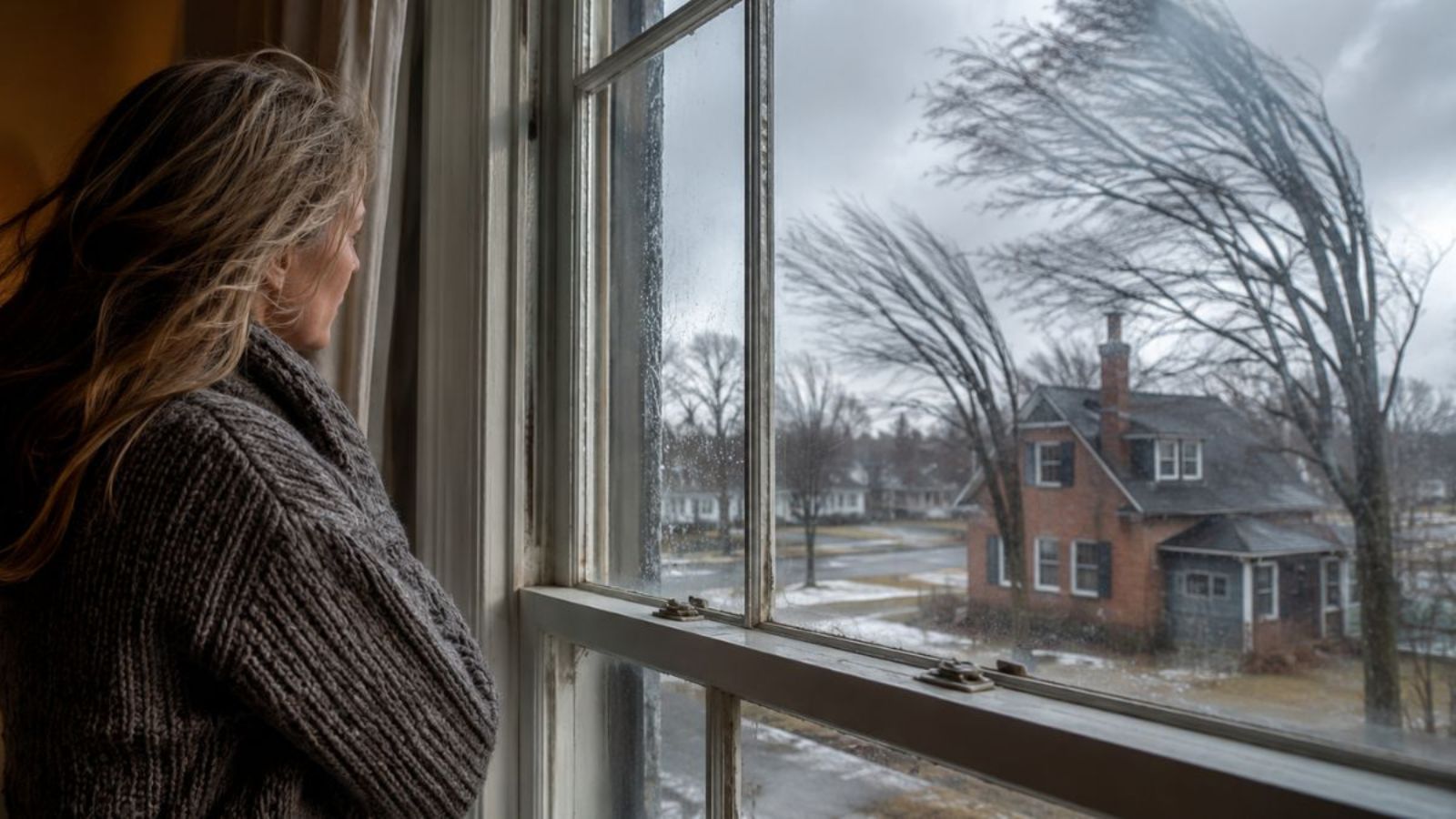
During Omaha’s strongest north winds, a window that is normally quiet can suddenly produce a high-pitched whistle. A recurring question in the window industry is whether that sound means the glass has failed. In most cases, the answer is no.
When windows whistle in the wind, the sound is usually caused by air being forced through a small gap around the sash, frame, weatherstripping, or window opening. Omaha’s strong north winds make the sound more noticeable because increased wind pressure can expose weaknesses that remain quiet during calmer conditions.
The Air Gaps That Create a Window Whistle
The glass itself is rarely responsible for a whistling sound. Moving air can produce the noise when it passes through a narrow opening around the window assembly.
A common misconception is that a whistling window automatically has a cracked pane. More often, the issue involves how the window closes and seals.
Common areas to inspect include:
- Worn or compressed weatherstripping
- A sash that does not make even contact with its seals
- Loose or poorly adjusted hardware
- Gaps around the window frame
- Deteriorated exterior caulking
- An installation gap between the frame and rough opening
The sound’s location can narrow the possibilities:
- Around the sash: Weatherstripping, hardware, or sash alignment may be involved.
- Around the frame: The perimeter seal or installation area may need attention.
- Near the trim or wall: The air pathway may extend beyond the visible window components.
This distinction matters because adding caulk to an exterior gap will not correct a sash that is failing to close tightly.
How Omaha’s North Winds Expose Weak Seals
Strong wind can reveal a weakness that is difficult to notice during calm weather. As wind pressure increases against the exterior of the home, air may be forced through a small pathway around a window.
The pattern across the house can provide another clue:
- One window whistles: The individual opening deserves closer attention.
- Several windows on the same wall whistle: Wind exposure may be contributing.
- Windows on different sides behave differently: Their positions may expose them to different pressure.
The loudest window is not necessarily the only window with an air leakage issue. Its position may simply make the sound more noticeable.
In practical terms, strong wind often reveals an existing weakness rather than creating a new defect.
Signs That Reveal Where the Air Is Entering
The loudest point inside a room is not always the exact location where outside air enters. Air can travel around the frame or through nearby building materials before becoming audible.
A basic inspection can begin with these observations.
Listen around the entire window
Check the sash, corners, frame, trim, and surrounding wall. The sound may be strongest somewhere other than the actual air pathway.
Compare nearby windows
Windows of similar age and design provide a useful reference when exposed to the same wind. If one behaves differently, that opening may warrant closer attention.
Check the sash
Look for a sash that:
- Feels loose
- Does not close evenly
- Requires unusual pressure to latch
- Does not appear to contact the weatherstripping consistently
Inspect visible seals
Look for cracked caulking, separated joints, hardened weatherstripping, visible gaps, or deteriorated sealant.
Note accompanying symptoms
A whistle combined with these conditions provides more useful information:
- Noticeable drafts
- Rattling
- Moisture
- Difficulty operating the window
- A noticeable temperature difference around the opening
Sound should be treated as a clue, not a diagnosis. When windows whistle in the wind, a sharp sound can come from a very small opening, while a larger air leakage problem may produce little noise.
Window Conditions That May Be Behind the Noise
Once the likely source is identified, the next question is whether the window needs adjustment, repair, or replacement.
Not every whistling window requires replacement. The problem may be limited to a specific component.
| Observation | Area to Investigate | Possible Response |
|---|---|---|
| Whistle where sash meets frame | Weatherstripping, hardware, alignment | Adjustment or component repair |
| Sound around outer frame | Perimeter seal or installation | Seal or installation evaluation |
| Cracked or separated caulking | Exterior perimeter | Repair failed sealing |
| Whistle with noticeable draft | Window or surrounding opening | Air leakage assessment |
| Several windows whistle on one wall | Multiple openings and exposure | Compare affected openings |
| Whistle with moisture or damage | Window and surrounding structure | Closer condition evaluation |
The age and overall condition also matter:
- Newer window with an isolated issue: May need adjustment or installation review.
- Older window with deteriorated weatherstripping: May need component repair.
- Older unit with multiple failing components: Replacement may warrant consideration.
The whistle identifies a symptom, but the condition of the surrounding components determines the appropriate response.
When a Whistling Window Needs Attention
A whistle during an unusually strong wind is not automatically evidence of serious damage. When windows whistle in the wind, concern increases when the noise accompanies a change in window performance.
A closer inspection is worthwhile when there is:
- A noticeable indoor draft
- Rattling components
- Difficulty opening or closing
- Visible gaps around the frame
- Deteriorated weatherstripping
- Separated exterior caulking
- Moisture around the opening
- A noticeable decline in performance
The timing can also provide context. A window that begins whistling after years of normal operation may have aging seals or components. A newer window that develops the sound may warrant an evaluation of its installation or adjustment.
Caulk should not be treated as a universal solution.
Caulk can address:
- Certain exterior perimeter gaps
- Failed exterior sealant
- Small visible sealing deficiencies
Caulk cannot correct:
- A misaligned sash
- Worn hardware
- Damaged weatherstripping
- Problems inside the window assembly
- Installation issues beyond the visible exterior joint
Identifying the source before making repairs helps determine whether the issue involves the window itself or the surrounding opening.
Frequently Asked Questions
Can a whistling window still be properly sealed?
It can have a generally functional seal while allowing enough air through a small pathway to create noise under high wind pressure. The sound alone does not establish how much air is entering the home.
Why does only one window whistle when several are the same age?
Position, exposure, installation conditions, and component wear can differ between openings. A window on a windward wall may experience different pressure from another window of the same model.
Can closing the window more tightly stop the whistle?
If the noise results from incomplete sash contact or hardware that is not pulling the sash firmly against its seals, proper closure may change or eliminate the sound. If the source is around the frame, it may not.
Can the loudest window also have the largest air leak?
Not necessarily. A small opening can create a noticeable whistle because of the shape and speed of moving air. A larger air leakage pathway may produce little noise.
Does a whistling window always need to be replaced?
No. Adjustment, weatherstripping, hardware repair, or perimeter sealing may be appropriate depending on the cause. Replacement becomes a consideration when the window has broader deterioration or continues to perform poorly after reasonable repair options are evaluated.
Discount Window and Door of Omaha – Window Replacement Company
At Discount Window and Door of Omaha, we are committed to providing the best quality doors and replacement windows. We employ the most skilled installers to ensure the highest standard of quality service. Our Omaha door and window installers are highly trained, certified industry professionals with years of experience, including some second- and third-generation employees.